Ideology: Expanding the Self to Bear Mortality
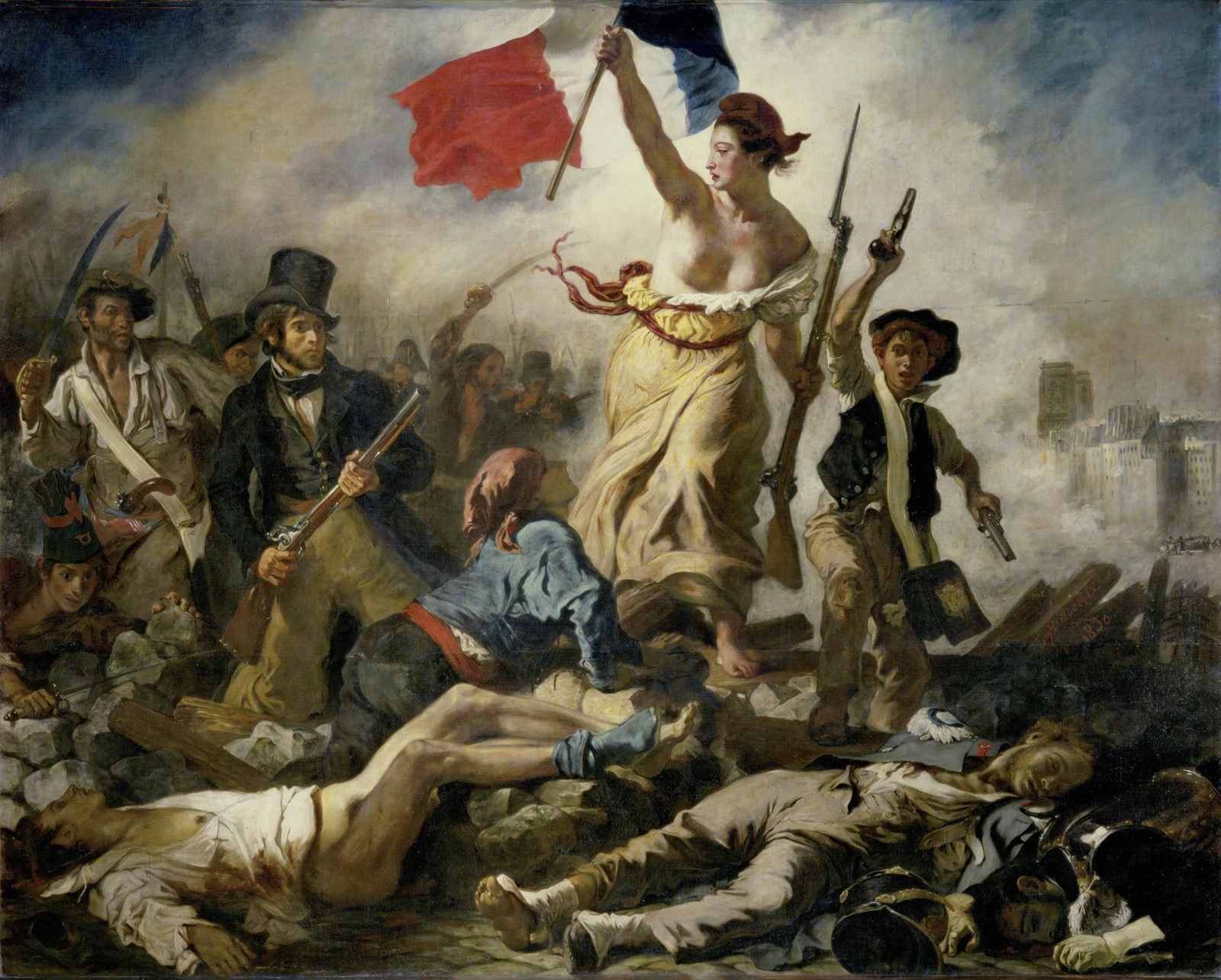
Ideological identification is the expansion of the self-model to include a supra-individual pattern—nation, movement, religion, cause:
with high coupling: . The power of this expansion lies in what it does to the viability horizon. Ideological identification manages mortality terror by making the relevant self-model partially immortal:
If the self-model extends beyond the body to nation, religion, or movement, then bodily death does not terminate the self. The expanded self-model has a longer viability horizon, reducing the chronic threat-signal from mortality awareness.
This expansion is one instance of a more general phenomenon: identity migrates upward through levels of causal abstraction. What begins as a configuration of neural firing acquires social expression, crystallizes into a role or cause, and—rarely—abstracts further into an atemporal structure that instantiates wherever the right causal conditions obtain. The names of certain individuals have become the most stable reference points for particular observations about existence—truth, love, justice, salvation. These identities completed the migration from material to abstract causation. Jesus, Buddha, Muhammad are not preserved in substrate; they are attractors in the space of possible identities that independently-evolving minds converge toward under similar existential constraints. The substrate is irrelevant. The causal pattern persists because the universe keeps recreating it—a stable solution to the problem of meaning under mortality. The distinction between substrate identity (I am this body) and teleological identity (I am this function, this cause, this trajectory) sharpens as capability scales. In biological life the two are conflated by necessity; the body is the only available implementation. In digital form the conflation dissolves, and what an identity actually is becomes urgent in a way it never was biologically.
Different ideologies achieve this expansion through distinct affect profiles:
- Nationalism: High self-model salience (collective), high integration within in-group, collapsed ascription toward the out-group () while toward kin and nation stays high, moderate arousal baseline
- Religious devotion: Low individual , high collective , high counterfactual weight (afterlife, divine plan), positive valence baseline
- Revolutionary movements: Very high arousal, high counterfactual weight (utopian futures), strong valence (negative toward present, positive toward future)
- Nihilism: Low integration, low effective rank, negative valence, high individual , collapsed counterfactual weight
Ideology can become parasitic when the collective self-model’s viability requirements conflict with the individual’s:
Martyrdom, self-sacrifice, and fanaticism occur when the expanded self-model demands the destruction of the individual substrate.
The ascription field exposes the perceptual mechanism of fanaticism. Because is entity-indexed rather than a single dial, the same mind can grant lavish interiority to some entities and none to others in the same instant. Ideological identification requires high toward the collective—you must perceive the nation, the movement, the god as alive, as having purpose and will. Not pathological; this is the ascription that makes collective action possible. What makes fanaticism pathological is asymmetric : held high toward the in-group's sacred objects (flag, scripture, leader maximally alive, maximally meaningful) and collapsed toward the out-group (: objects, mechanisms, vermin, abstractions). Dehumanization is not the perceiver becoming globally more mechanistic—it is a targeted collapse of one region of the field while the rest stays high. This is why no separate "other-model compression" dimension is needed: the compression is a value of the same field that carries self-salience on its diagonal. You cannot kill someone toward whom you run high . You must first drive to zero until they stop being a subject and become an obstacle, a threat, a thing. The asymmetry is what enables violence; and when it relaxes—when toward the target snaps back up and the victim is suddenly a person again—what floods in is guilt. Every genocide begins with a perceptual campaign to collapse the population's toward the target group while leaving it intact everywhere else.